16 September 2009

Some Free Advice

As I was finishing my dissertation this past June, a book arrived in the mail at the last minute. Published in 1993, this collection of articles details various ways that increasingly religious states organize and remake themselves. One in particular about Afghanistan jumped out at me, because author Oliver Roy argues in the second paragraph that the 1989 Mujahidin victory over the Russians represented “…the first liberation war won by a movement which proclaims Islam, not nationalism or socialism, as its goal” (491). My dissertation is about Palestinians who have become increasingly religious in the last few years. In doing so they downplay the importance and legitimacy of the state while lifting up their own crappy status as refugees. Initially I saw this social project as anti-political, but quickly I realized that what actually happens on the ground is much more complicated. I argue in the dissertation that the religious being represents a threat (at least in Jordan) because his allegiance is unclear. Does he honor God or King? He may pursue a political path to a more rewarding religious life, or he may use religion to boost his social status for political ends. Religion can be a social means to a political end, and the indirect path to political action or aspiration makes each religious person less legible to the state. So when I read Roy’s article it really hit me that what we’re watching in the Middle East right now is substantially different that many post-1948 conflicts there in one substantial way: strife focuses less and less on political goals like repelling the Orientalist state, and more and more on constructing a religious identity.

I argue in my dissertation that, very broadly, there are two strands of Islamism. The first I call 1948-Islamism, and by this I mean a religious/political response to a political confrontation such as the Nakba, 1967, 1973, 1990, or 2006. These are conflicts in which the opponents are more or less easy to define, typically the West/Zionists versus Sunni Arabs, and the conflicts are pretty political. The second strand I call Afghanistan-Islamization, or 1989-Islamization, by which I refer to conflicts that accelerate the desire of fundamentalist Sunni groups to establish a religious state not just because religion can occasionally repel outsiders, but because theocracy is simply the end goal.

Roy points out that Afghanistan has a long history of jihad (I use this word in its true sense: Struggle. I don’t mean this as hysterical American’s use it), but this was always linked to the political aims of the state. Muslim resistance to the communist government, as we all know, prompted the Russians to send in troops in 1978. The rest is history. 1978 was not the first time that Muslims took over a country, but previously those resistance movements were linked with a political ideology (i.e. Algeria). Further, as Roy reminds us, “purely Muslim upheavals” always failed as forms of governance in the past. As much as the rank and file may be enamored with resistance movements in the throws of politics, it’s not too long before they become agitated because no one is around to pick up the garbage. Governments do have to carry out some small forms of governance, after all. Despite this history of failure, Afghans successfully thwarted the Russians in a pure religious resistance movement. I think we have seriously underestimated how much this fuelled the rise of a strand of conservative Islam that ultimately birthed the Taliban. I also think there is little coincidence of timing in the post-1978 changes in this part of Asia: The Islamic Revolution in Iran soon followed, Pakistan adopted more strict and religious laws, and on and on.
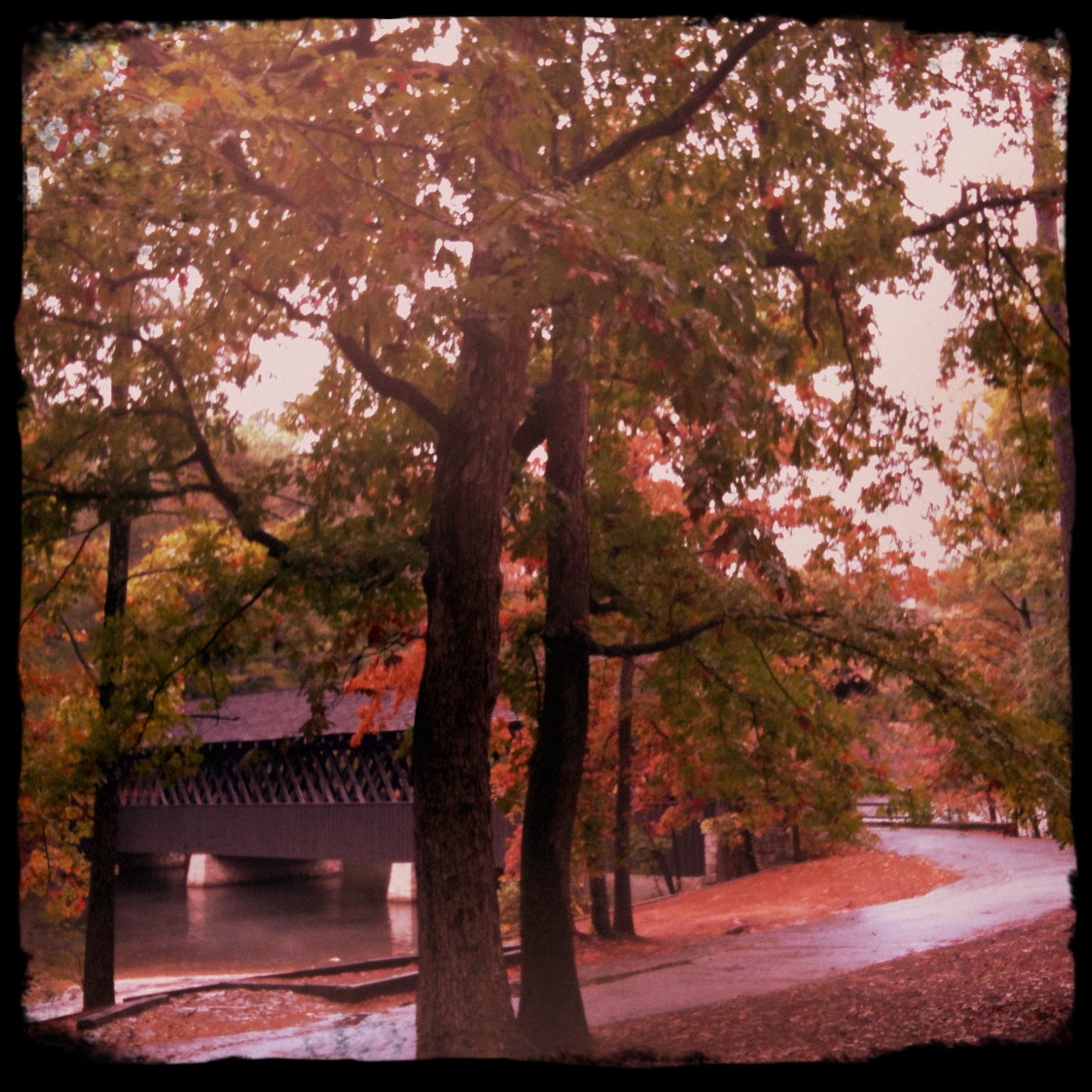
Of course nothing is totally divorced from politics. Between 1978 and 1989, both Saudi Arabia and Iran, Sunni and Shia’ states respectively, became increasingly interested in preventing competing versions of Islam from seeping into their states. Both Iran and Saudi wished to secure the interests of their particular religious worldview in order to erect a buffer against possible foreign penetration, and to further their aspirations for an Islamic state of their own. Both countries interfered in Afghanistan by funding Islamic organizations that held like values. Not until the defeat of the Russians seemed eminent did these organizations begin seriously to question what the final aims of the revolution needed to be. While the Saudis pushed not so much for revolution as for a renewal of their conservative religious values, the Iranians pushed directly for an Islamic revolution, an experiment they had not yet tried. The Afghanistan Sunni camp, increasingly disenchanted with Saudi interpretations of the religion, turned away. The Saudis lost their first ideological battle with Iran. More directly: The Sunnis lost their first war with the Shia’.

I know, I know, the Sunni and Shia’ have been at each other's throats since the Thabi’un (first generation of post-Mohammad Islamic folks) were in business. Yes, I know, Ali, Hussein, all that stuff. But this is different to me than the post-Mohammad struggles in Islam that resulted in the strand of those who follow Ali and the Umayyads. Those battles took place before globalization existed. Those battles occurred before George Bush called America’s efforts against “Islamic Terrorism” a “Crusade,” thus resulting in a bajillion young previously secular Arab men dedicating their lives to Salafi Islam. All of that happened before man perfected the ability to kill millions of people quite easily. Those battles revolved around how to be a Muslim. They did not focus on repelling or defeating a completely alien enemy from halfway around the world. Nevertheless, the ideological (not to mention actual) feuds between the Sunni and Shia’ still provide ample friction for the two strands, and that has survived quite well into today. Thus, we have tension and indirect conflict between Saudi and Iran in Afghanistan. Young Muslims in both countries may have felt like the weight of some serious-ass history was at work in that political struggle in the 70s and 80s, and they were right.

Now we have two Sunni fundamentalist groups competing to be the most crazy: The Taliban and al-Qaeda. Analysts often refer to these groups as “radical,” a label I reject. They are conservative. They wish to “restore” those around them to the glory days of the Shahaba (the companions who lived with the Prophet Mohammad). There is nothing radical, to me, about seeking a 7th century utopia. Here, for my money, is the big difference between the two groups. The Taliban emerged from a post-Soviet Afghanistan, perhaps in response to Mujahidin corruption. As I read their goals, they seek a pure Islamic state, and could care less about articulating their religious demands to earthly politics. Al-Qaeda, on the other hand, has an Islamic rhetoric, but remains an elitist and political organization. The Taliban seek Islam for the sake of Islam, while al-Qaeda uses Islam to seek their political objectives. In other words, the Taliban represent the next step in 1978-Islamization while al-Qaeda represents the same for 1948-Islamization. Here, in my opinion, is the So What to all of this: The Taliban’s religious objectives are not something that secular governments can do anything with; al-Qaeda has fairly secular objectives (albeit cloaked in a religious discourse), secular governments can actually understand their demands. The Taliban seeks to propagate a Shahaba-style world, how can one engage with this? Al-Qaeda wants to curb American imperialism. By transmitting this political message in religious terms they recruit followers who may not understand the political implications of a U.S. military presence in Arab countries as well as they understand “infidels” in “Muslim lands.” To be sure, neither OBL nor az-Zawahiri have any religious credentials. In contrast, Mohammed Omar, an Arabic-speaking Afghani, is the “Commander of the Faithful,” and allegedly has a background studying Islam and later teaching it at a madrasa in Quetta. Thus the name of his organization, “Taliban,” is named for the “Students” who first joined him to form the organization after the Soviets left town. Mohammed Omar and OBL have enough in common that the former apparently sheltered the latter, but they likely differ quite a bit about how to implement an extraordinarily narrow conception of the Sunnah (the teaching of the Prophet). In other words, it’s worth asking why these groups haven’t joined forces and become one big group. I think the answer is because they actually have very different goals, and the Taliban’s should alarm us more than al-Qaeda’s.

Al-Qaeda will not remain in the hands of OBL and Zawahiri forever, and we should ask what a new al-Q might look like. Given that the Salafists have done a smashingly good job of adopting technology such as Facebook and using these things to spread their message and recruit new folks, it’s a good guess that many of those just now coming into the fold are young. That’s also a good guess because thus far that seems the case, and because the population in the M.E. is really young anyway. These are kids born well after 1978, let alone 1948. Jarret Brachman just wrote a piece in Foreign Policy arguing that what’s to come may be much worse than what we’re currently witnessing. Like me, he believes that al-Q is an elitist organization, meaning that a great deal of information is guarded by a few rather than dispersed in order to empower the masses. However, a younger devotee named Abu Yahya (Yahya = John the Baptist, bil 3rabee) has positioned himself to become the likely inheritor of al-Q in the future. Contrary to OBL and Zawahiri, he aims to reach out to young folks and dazzle them with his apparently engaging personality. As Brachman writes, “…Abu Yahya offers the global al Qaeda movement everything that its old guard cannot.” So what? Glad you asked.

To return to my insightful, but crappily written dissertation, I argue that because the aims of al-Qaeda are political we have something to talk about. This, again, is in opposition to the Taliban whose views and aims are so ethereal as to be, well, irrelevant to this world. How can one reason with men who spend time arguing that ants are made of glass? So, when Brachman points out that in the not too distant future we may find ourselves clashing with an al-Qaeda that acts more like a crazy religious fundamentalist organization (i.e. the Taliban, or the American X-tain Right) than like al-Q, that’s the kind of shit that should keep you up at night.

In 2006 Brachman co-authored a report for the Combating Terrorism Center (CTC) in which the authors point out, “…there has been a shift in intellectual influence from laymen in Egypt (like Sayyid Qutb) to formally trained clerics from Palestine (often living in Jordan) and Saudi Arabia. While it is unclear if this correlates with new developments in Jihadi theory, it certainly indicates a trend toward shoring up that theory with religious credentials.”  I'll skip ahead for you: Yes, it is a new development; Islamism of this form transitioned from a group to an international movement.  They indict Palestinian-born Jordanian al-Maqdisi as the single most significant living “Jihadi.” Al-Q's interest in Sayyid Qutb (an Egyptian), al-Maqdisi (an Urdustenee), and now Abu Yahya (a Libyan) all indicate just how viral and transnational this movement has become. In 1964 Qutb, the grandfather of this line of thinking, wrote: “The establishing of the dominion of God on earth, the abolishing of the dominion of man, the taking away of sovereignty from the usurper to revert it to God, and the bringing about of the enforcement of the Divine Law (Shari’ah) and the abolition of man-made laws cannot be achieved only through preaching” (58). Well, then, down with the Jahiliyyah (those who live in ignorance of god’s wisdom). Point is, whatever OBL envisioned, it seems that the movement and message behind al-Q has transformed the organization into something that young, un/underemployed folks in the Muslim world can grasp. What oppressed Arab actually embraces despotic rule?

And here’s a difficult question for Americans: Why shouldn’t young unemployed, often educated men in the Muslim world find the message of resistance alluring? I don’t ask this to offer support to al-Q, but to ask, Holy crap, what else have they got? Over my fieldwork in Jordan I watched young men with literally nothing to loose become more and more and more and more religious. I couldn’t blame them, though they frequently irritated me with their neverending focus on the minutiae of religion. They were young, refugees, most educated, politically aware, multi-lingual, and unemployed. They had a choice: live as shat-upon refugees in Jordan, or become Salafists and watch their social status soar in a day. Surprisingly little knowledge of Islam and the Qur’an allowed them to henna their beards and patronize their too-secular parents, wives, and me. Given their status in Jordan, I can’t imagine why they wouldn’t engage in something that allowed them to rule over their lives even just a little. Men bragged in front of me about taking additional wives, and one even lied to his friends about a mosque supporting his family so he could study. (His parents paid his rent upon monthly threat of having their granddaughter turned out onto the street.) As much as they irritated me, I’ll admit that if I were any of them, I’d do the same thing. This particular path, the religious path, seemingly allows the trampled to be something much better: a moral man. That those I interviewed expressed admiration for al-Q (though a strong and universal dislike for their violence, I’ll add) this social movement does not indicate, I argue, anything more than the appreciation of an opportunity to be something other than a marginal person for most who follow. All of the people in my dissertation were as secular as I am before 2003. All of them.

While Brachman is right, I think, about the dangerous transition of al-Q into something more Taliban-like, I think we should stop a moment and ask Why people are enamored with this stuff. Sure, they really are god-fearing folks. But that actually has been corrupted by people like OBL in order to mobilize political action, including violence. When America continues to fight Islamic violence, we are often actually fighting the impoverished. Not always, of course. Plenty of ridiculous people exist, but I think even more reasonable people than that exist. Want to stem the violence? Give them jobs. (Same is true in America for Americans, I’d bet.) We have to act quickly before al-Qaeda reinvents itself as a movement unwilling to make political (earthy) demands.

29 August 2009

Rose Garden, Cont.

I took a few pictures today while it's sunny here:


And from Sonoma County:
 
"Libalism is a mental disorder"
 

28 August 2009

Berkeley

We've been here 3 weeks today.  Wow.

Here is K at Boalt Hall, where he is currently chained to a desk.  That's actually not an indirect John Yoo joke, it's just the policy for first-years.  We biked over there last weekend (see bike in picture for proof) and K almost died. 

Now on to Yoo.  On the first day of school last week about 100 protesters came to Boalt to let the school know that Yoo should be fired.  They actually went into the building and disrupted his classes.  Several were arrested.  The local NPR station had pretty good coverage of it; the Dean was on for several interviews.  Subsequent to this, the sign below showed up in the window, and the Deal sent an email explaining that though he personally thinks Yoo sucks, Yoo cannot be fired unless first convicted of a crime. 
Today I biked over to Cal for another protest.  I missed getting a picture of a man in a black hood and black gown thing with "CAL" on his chest.  I watched several people attempt to hand out leafeletts with information while students ignored them.  It was like being in the 909, seriuosly.  K defends the students.  He says that there are so many people handing out so much shit that people just shut down while walking through there.  Perhaps, but still, how can you miss these folks?


K doesn't know this, but there can be a life in Berkeley outside of Boalt.  Please refrain from informing him of this, though.  I've been biking, and found this place after quite a climb:
The Berkeley Rose Garden was some sort of WPA project or something.  It opened in 1937 (give or take).  We live across the street from the Bay, and this place is up in the hills, and boasts a view worthy of the bike ride up there.
 
Among the fog, and you'll have to trust me here, is a Bay.  It's the glimmery thing there in the middle.  They have fog here!  I can't get over it.  I saw that it's 108 in Rivercity today, and the usual smog is made more awful with the fire smoke funnelled in to the valley.  Yeah, it's going to hit 79 up here today.  I actually put the sun shade in my car window this morning.  It's just awful.   OK, but the rose garden:
 
 
Yesterday I picked up K and we drove across the bridge to pick up S who is visiting her sisters and working on her tenure letter.  We went to the Monk's Kettle and had good local food with beer that make K happy.  It was a great and too-short visit.  S is headed to Jordan in October, and I wish her a safe and productive trip.
 

23 August 2009

The Heat is on: An I.E. Retrospective

Yes, we turned on the heater today. In August. It all started when we moved to Berkeley 2 weeks ago for K to attend more school. By noon it was 66 degrees in our small apartment in Family Student Housing, and we turned on the heater. It has been so weird trying to get used to living on the coast after years of living in the stinking desert.

So, let me now post pictures and thoughts about the Inland Empire, or as we remember it: The 909.

This is Highway 18 approaching the turn off to Crestline.  You can see the smog that rolls in daily from L.A.  We drove down into that 5 days a week to go to school to gets smarter and stuff.  Some mornings K and I would look down at that from our mile elevation and he would note: "They could all be dead down there."  Still, we drove on.

The San Bernardino valley:

Here is were K and I met in 1998:
 
This had to be both the best job I ever had, and the worst.  It was great, because crazy people worked there.  I've never worked with such a group of characters before or since.  I was hesitant to leave San Diego and move to San Bernardino County for a job that I figured early on likely would not work out.  But I found that Redlands was actually a nice town, and I really liked all those I worked with at the SBCM.  Where else can one spend time with people like Jim and Star, or Steve, or Seth, or Julie, and of course Barbara ("Stupid man!")?  I even learned some stuff.  I found a bobbin lace group there on Wendesdays and learned about all sorts of hobbies I didn't know I needed.  Even when the work stopped K and I ended up back in the IE so I could go to grad school.  We spent 9 months in San Diego before moving back. 

Here is Mr. J's Donuts:
 
Home of the frosting-filled donut [!], my husband mistook this for food for many, many years.  Ahhh, youth.
The Blues:
K found this an acceptable place from where to procure jeans to wear to work.  He alledges that one day before work, the ass blew out of a pair he was wearing.  He likely finished his cheese fries, and then claimed to walk in there in his assless jeans and calmly buy another pair.  He further alledges the staff was nonpulssed.  
A pizza place with acceptable beer:
 
I like this picture because we spotted an SUV with a "NOTW" sticker on the back.  What are the odds of that!?!  
OK, now one that matters to me:
I first had Cuca's at the Museum.  I was working in the lab, and it was a rainy day.  Quintin offered to go and pick up food for everyone.  When asked what I wanted I told them I didn't really care for Mexican food.  True at the time, they gasped.  Seriously.  In unison.  Barbara told me that I was eating their food, and I would like it.  I protested, and finally Tina and Barbara simply paid for my food and ordered me a BRC (Bean, Rice and Cheese burrito).  Green sauce on the side.  "I don't like that either," I told Barbara.  Again, she forced the issue.  I capitualted, and my life was changed on that day.  In all seriousness, and I type this with as much love for Cuca's as embaressment at my life choices, I chose the grad school I did in large part because it was close to Cuca's.  Don't even tell me there are other considerations when choosing a Ph.D. program, cause' that's not true.  I miss this place so much.  Don't get me wrong.  Berkeley has great food.  In fact, today we went to a great place with a hard-to-remember name (behind the Peet's on 4th? Anyone?), but it was no Cucu's.  It was healthy, and gourmet, and really good.  But, Cuca's!  Here's how it works.  I go up to order my BRC and iced tea.  I pay (in 1999) 1.83.  They call my number, and I ask for green sauce.  First, Maria with the barely-there eyebrows tells me that I should have ordered the green burito.  I appoligize profussely, and ask for green sauce.  She informs me they are out.  I can see it on the shelf behind her.  I ask her to fill some containers with the sauce right behind her.  She rolls her eyes, and gives me green sauce and an iced tea with a fly in it.  Oh fuck, I love this place!  Even the worst Cuca's burrito and the occasionally horrid service still pale in comparison to the sweet ambrosia they roll into a tortilla.  I fricken' went to Cuca's on my wedding day!  I have for years now just called in my order as I'm on the way, and K kindly goes and pays and dishes out beat-down for the green.  I had my last Cuca's burrito over 2 weeks ago now, and as I held the last bite in my hand I sighed.  Finishing that food signaled that things were about the change.

Joe Greensleeves:
 
We had dinner there the night we were married.  A bit less than a year ago K and I spent several evenings going through a big jar of change and rolled it.  We had well over 100 bucks.  We went to JG and had a great meal and paid for it with our decade of change.  It was like eating for free.  
Before I lived a small BART ride from Britex, this place supplied me with much of my fabric diet.  One day I went there with Star to look at potential 1880s dress fabric.  At one point, he was feeling a particular fabric, and told me, "I just love the cottons in this store."  Again, I ask, when am I ever going to work with such crazy people???

A view from the Valley up to where we lived:
 
From Loma Linda looking right up to our hood.
Our favorite Indian food:
 
We had dinner there with Barbara for our last meal there.  Where the waiters have beautiful eyebrows, and they have 2 televisions either playing Indian music videos, or When Animals Attack (seriously).  I will miss them.  

Lake Arrowhead:
 
The local and mostly acceptable Mexican place which K always called "Papa-gay-ooos."  One waitress told K he looks like a priest in South America somewhere who was kicked out of the church for having multiple wives.  

Here is the view from my house in the fall:
 
I will also miss the dogwoods.

A view toward the front of my house:
 
  
Early this summer a mama bear and her cub came to spread trash all over our parking deck.  Seth and Julie were minutes away from arriving for dinner.  The two bears found stuff to eat, and hurried up the hill right before S and J arrived.  
What I will not miss:

Rivercyde on a pretty day:

Here's the thing about the 909, and the thing is: It's hard to live there.  The place is hostile in myriad ways.  Many of the residents are Jebus-loving asshats.  Many of the SUV-driving war hawks that shared my commute on the 18 really, really, REALLY, didn't know how to drive on a curvey mountain road, and typically went 10-30 miles under the speed limit on the 18.  Once on a residential street where the speed limit was 15, they went 30.  What manly men.  They are generally racist and hostile toward all the brown people, and often attempt to link the migrant workers (whom they hire) to terrorists.  Seriously.  It's smoggy.  It's hot all the time.  When K and I lived in Rivercyde I walked to school from the above parking lot on 23 December 2002.  I called him and asked him to come an pick me up because it was so hot I didn't want to walk back without water.  It was, I learned that day, 100 degrees.  What kind of X-mas is that?!?  Racist, hot, smoggy, and really conservative.  And, that's why I'm glad I lived there.  It was so awful that it made me a better person.  Every day was such a challenge that I realized early on that I was either going to die, or deal.  I think I died a little, but mostly I learned that I can live any where, and even learn to appreciate it.  I actually miss it.  I have no desire to live there again, but I will always have some place in my heart for the 909.

There is something about a place this hostile that somehow shapes people into interesting and even neat people, like those at the Museum.  People like that can't live in Berkeley.  It's easy to go on here without trying much.  It was probably not even 70 degrees, and it's beautiful, and everything tastes good, and the people are nice.  What kind of character building can come from this?  But the 909, well.  People used to shout at us, or try to ram us with their large American cars if we attempted to back out of a parking space after picking up our mail.  Stop for a pedestrian?  Only if you hate America, by god.  Bike?  Please.  That's for sissies.  The 909, where they picked up our trash on MLK Day even though it's a holiday.  Where they stole my trashcan and BBQ.  Either you give in and turn into to one of them, or you rise above it and become the kind of person everyone wants to spend time with.  The 909 made me into a person who now realizes that friendship can form the better part of a coping strategy.  I value that, and I valued my time there.  Once culture is sucked out of a place, as it is there, individuals create it for themselves.  My most creative years so far were spent there.

And there are good people there too.  I realized in the winter of 07/08 when I went for a walk up my snow covered street that it's not as white there as it feels.  I have brown neighbors.  I have mixed-race lesbian neighbors!  How cool is that?  My hope for the 909 is that when the loonies start to argue that the migrants are smuggling dirty bombs, my neighbors speak up and say No, they are people just like all of us.

06 July 2009

Your Call is Important to me


I am done. After seven years my parking permit has expired, and I don’t need a new one. I’ve turned in my keys. I have no office. There are no more forms for them to sign. There are no more forms for me to sign. It has got me to thinking about the things I’ve learned here in the last seven years. Graduate school didn’t teach me much of what I thought it would. This process has taught me far more than I expected. In part my mistake was assuming that I’d learn a lot of facts. I knew going in that I’d have to learn a language, and read a lot of theory. But I never quite understood going in how much I would learn about how people think, and why we do what we do. I both value this knowledge and understand it’s the exact kind of knowledge that people easily disregard as fluffy or too subjective.

More recently I’ve been thinking about the paradox of this knowledge. There is something about this degree that makes people want to
1. Quiz me in hopes of catching me in a mistake; look, I just don’t know what year the Spanish American war ended. Deal.
2. Criticize my major choice and/or my university choice,
3. Accuse me of being self-indulgent to the point of embarrassing myself, and
4. Reassure me I’ll never find work, and I’d die in the poor house

The paradox is that people work diligently to undermine what I’ve done, and yet seem intimidated by what I’ve done. Which is it? I had no idea how isolating this would become. In part this is isolating because the further I delve into my topic the more I know and the less others still have interest or knowledge to talk with me. And in part this is isolating because people just don’t see me as the same person for some reason. Directly or indirectly, I have lost all but two of the friends I had when I began this. It has been pretty painful to learn who among those I care for is willing to discuss directly my perceived “lavish lifestyle,” and admonish me to “live in the adult world and get a job.” I must have missed the Lavish part of this. I taught for five years here for 1500 bucks a month. Teaching douche bags here has never seemed lavish nor well-paying, but I assure you it has often felt like tedious labor. What really irritates me is that if I told people I was having a baby, people would express happiness and well wishes, and likely never once point out what a self-indulgent thing that is, or caution me that raising a child will likely cost a million dollars or more. Lavish? Self-indulgent?

I expected I’d enjoy the same emotional support I received as an undergraduate, and the opposite has turned out to be the case. It has been very difficult to hear people I care about say really stupid things to me about what choices I am making. Few people have congratulated me. Almost all those I speak with have asked me if I’m going to actually get a job, or if I’m ready to live like an adult. Wow, I would never say such things to those who have said stupid things to me.

And yet, I wouldn’t change a thing. I love what I’m doing, and I expect this is the biggest reason people are willing to say crappy stuff to me. I no longer feel remorse over lost friends because I’ve met some wonderful and encouraging people along the way. I would do anything for those folks I could, as they already have for me. I have an amazing committee, and I’m astounded at what they have helped me to learn. They are generous, funny, and kind. When I finished my dissertation defense they had a meeting, and then came in and hugged me and congratulated me, and had a bottle of vodka for me. I really am hard pressed to imagine what more I could ask for. I wouldn’t change a thing.

I also really underestimated how much I would learn about myself throughout this. I remember at the end of my Masters talking with a student one year ahead of me. She’d done all I had in addition to teaching. I could not at the time fathom doing as much plus teaching three classes. She said, “You’ll be amazed at what you can do.” I’ll never forget that. And I am amazed. I don’t know a lot of facts, but I’m good at explaining why people do what they do, and I can put that on paper and go to two conferences, and write a zillion seminar papers, and teach three classes, and grade 75 crappy essays, and still have time to knit and watch DVDs with K.

As this time comes to a close, I’ve been reflecting on what I’ve learned in the past seven years.
1. Who my real friends are
2. I can live well in a place I dislike
3. I’m pretty good at “learning on the way”
4. I can live on one cup of coffee a day
5. I can live on 20 cups of coffee a day
6. How to weave
7. I’m a good teacher
8. Though I’m still terrified of public speaking, most people don’t realize this when I’m speaking in public
9. I can teach a class even if I’ve done none of the assigned reading
10. Graduate students generally have only two ways of responding to questions in seminars: “I thought this part was interesting because…” or, “No, I didn’t like this article because I didn’t see how it fits with my project.”
11. Upper division, undergraduate classes are a million times more educational than a graduate seminar
12. I can shop at Whole Foods even on my salary
13. Graduate students have a lot of time, despite what they claim
14. The library is actually a phone booth
15. I can read a book a day and retain information that interests me
16. Intelligence is no requirement for finishing a Ph.D., but focus is
17. That ordinary people aren’t stupid at all (despite how they tried to convince me of this when I worked in retail in a past life)
18. People are inherently good
19. My decisions are now on trial
20. There is no greater threat to human rights than religion
21. People will believe what they want to
22. Anderson was right: “Whatever you can imagine, people do that; whatever you can’t begin to imagine, people do that too.”
23. Business majors cheat more than any other major. Then, they lie in their feeble attempts to extract themselves from their own homemade shit storm
24. Business majors resent learning more than any other major
25. The social sciences are much harder than the natural sciences because they require critical thought, not just memorization
26. I can reinvent myself in my 3rd year of graduate school and still finish on time (so there!)
27. People with Ph.D.s can still be nice and down to earth
28. Melville knew everything

29 March 2009

I Can't Escape From Charlie Sheen

Here we are in Santa Cruz, and we were sitting at a brewery having samples of beer when Two and a Half Men shows up on the TV!

22 March 2009

Macaron (a day late)